Showing posts with label Twig Walkingstick. Show all posts

Tuesday, May 24, 2011

Smart Stuff with Twig Walkingstick: Homegrown Frugal Frugivorous Fruitfest!

Twig Walkingstick lives in and around the Wooster campus of the Ohio Agricultural Research and Development Center. His alter ego is Kurt Knebusch, one of our super-talented writers and editors on campus. Each month, look for Twig to answer a reader questions and some additional interesting facts below. After Twig's post, we will be providing some ideas and suggestions on how to incorporate the info in Twig's column into fun science learning for your students and children.


Q. Dear Twig: You asked this last week: "Why would you want to grow your own fruit?" You mentioned a good way to learn about it.

A. My friend Miss McGillicuddy grows her own raspberries. She has bags and bags of frozen ones down in the freezer in her basement. Whenever she wants some, even in the middle of winter, maybe to make a raspberry cobbler, she goes downstairs and gets some. Simple. They're free, sweet and good. And in summer, whoa, during raspberry season, she picks them almost every day (she has to, there are so many) and can eat them fresh, if she wants to, till she pops. Which make, as I see it, some pretty good reasons to grow your own fruit or to try.

How to learn about it? Find gobs of helpful books at your library or bookstore. And also try this new one. It's called Midwest Home Fruit Production Guide. It's a fact-filled, fruit-filled, fruity fruitipedia. The place I work for, Ohio State, just published it. You can read about it here. You can buy it online here ($9.50). 

Fruitfully,
Twig

P.S. More good reasons: It's fun. Good exercise. And cuts your food bill with fresh, healthy food.

P.P.S. Frugal ("FROO-guhl") means thrifty, inexpensive, economical. Frugivorous ("froo-JIV-ah-russ") means fruit-eating.

Notes:
Another good way to learn more: Find a ton of fact sheets on fruit growing at Ohioline. Click the yellow "Yard and Garden" circle. Click the third bullet down: "Fruit." Then pick a fruit and start fruitin'! Learnin'! Both!

Remember, the kinds of fruit you can grow in Ohio and the rest of the Midwest include apples, grapes, pears, plums, peaches, strawberries, raspberries, blackberries, blueberries and a big bunch of others.

Our closing words come from three bards: "A crummy commercial?" (Ralphie, "A Christmas Story"). "It's a Major Award!" (The Old Man, "A Christmas Story"). "Tell me what I want, what I really, really want!" (Ralph Wiggum, "The Simpsons").

Good night, good luck.

Monday, April 25, 2011

Smart Stuff with Twig Walkingstick: Backyard Fruits that You Can Grow

Twig Walkingstick lives in and around the Wooster campus of the Ohio Agricultural Research and Development Center. His alter ego is Kurt Knebusch, one of our super-talented writers and editors on campus. Each month, look for Twig to answer a reader questions and some additional interesting facts below. After Twig's post, we will be providing some ideas and suggestions on how to incorporate the info in Twig's column into fun science learning for your students and children.

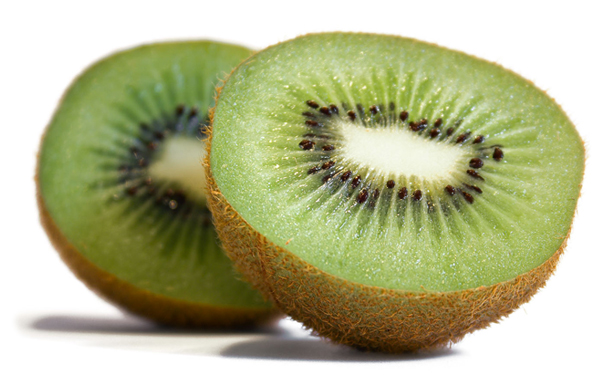
Q. Dear Twig: OK, here's another kiwifruit. So what did you mean, "more cool backyard fruits" last month?

A. Thank you. Chomp, chomp. I meant that you can grow a lot of other fruits in your own backyard, not just kiwifruits. (And you can grow those, too, if you want to.)

Like what? Well, in most places you can grow apples.

And peaches.

And pears and plums.

And grapes and cherries and peaches and apricots.

Strawberries, blueberries, raspberries, blackberries.

Plus weird ones, too, that you might not find in a grocery store: pawpaws, currants, mulberries, Juneberries, gooseberries, even ground cherries.

Sweet.

Next: Why would you want to do this? A good way to learn how to do this. And a chance to win that good way free.

Berrily,

Twig

P.S. Q. Why do elephants hide in strawberry patches? A. The research is inconclusive.

Notes from Twig:

The fruit types listed are for Midwestern growing conditions (like in Ohio, where I live). Others include quince, medlar, bush cherry, Cornelian cherry, persimmon and highbush cranberry.

Source: If you're eager to learn, check out Ohioline and start to dig around.

Q. Why do elephants paint their toenails red? A. To hide in a strawberry patch or in plantings of certain kinds of grapes, apples, cherries, currants, raspberries, gooseberries, mulberries, bush cherries or highbush cranberries depending on the shade they use.


Using this information in the classroom:

There are many, many cool ways to incorporate plants into your classroom. Here are two of our favorites:

Check out Growing Together, which you can buy at the Ohio State University Extension E-Store for $13.50. There are tons of cool activities and lessons inside and we use them in our program all the time. Love it!

And secondly, I bet you don't think of using plant to teach math, do you? Check out Math in the Garden for $29.95 from Gardening with Kids.


Lots of fun, hands-on ways to heat up your outdoor summer learning in the coming months of spring and summer. Enjoy!

Monday, February 28, 2011

Smart Stuff with Twig Walkingstick: Kiwis Can't Fly; Neither Can Kiwis

Twig Walkingstick lives in and around the Wooster campus of the Ohio Agricultural Research and Development Center. His alter ego is Kurt Knebusch, one of our super-talented writers and editors on campus. Each month, look for Twig to answer a reader questions and some additional interesting facts below. After Twig's post, we will be providing some ideas and suggestions on how to incorporate the info in Twig's column into fun science learning for your students and children.

Q. Dear Twig: Where do kiwis come from? The fruit, not the bird.

A. The grocery store, right? Right? Kidding. First they have to grow somewhere. And where they grow is on woody vines that farmers grow in orchards. The farmers grow them on sturdy poles or trellises. Reason: Kiwi vines grow like crazy.

Most of the kiwis sold in stores come from Italy, Chile, New Zealand, California and a half dozen or so other places.

People call kiwi fruit "kiwifruit," too. Reason: to not mix it up with the kiwi bird. The kiwi bird lives in New Zealand. Neither kiwi can fly. They have that in common. They're both also brownish and fuzzy. But inside they're different. The kiwi bird isn't bright green. Nor sweet nor juicy nor good for breakfast nor rich in vitamin C.

Next: If you give a Twig a kiwi – the fruit, not the bird – he'll tell you how to grow your own kiwis – the fruit, not the bird.

Kiwi me,

Twig

P.S. "Kiwi" can also mean a person from New Zealand. Note: Also not bright green inside.

  • Notes from Twig:
  • Kiwifruit's other names include Chinese gooseberry (though it's not a real gooseberry), melonette and yang tao (in China) plus the fun to say but rarely used goat peach, sheep peach, monkey peach and hairy pear.
  • Sources included two fact sheets, both called "Kiwifruit," one from where I call my home, Ohio State University, and one from our neighbor to the west, Purdue University.
  • Cool: The kiwi bird is the national symbol of New Zealand.
  • Not cool: All five kiwi bird species are endangered. Why? Imported predators, habitat loss, even cars.
  • Cool site: http://www.squidoo.com/kiwibirds.
Using this information for education:

Interested in learning more about the kiwi bird?

Here are some cool cross-curriculum lesson plans about the kiwi bird that cover social studies, phyisical geography, reading graphs, science, art, web-quests, history, volcanoes, culture, language arts, music, physical education, gender roles, economics, math, money and banking and much more.

Monday, December 20, 2010

Smart Stuff with Twig Walkingstick: Where do deer sleep during winter?

 Twig Walkingstick lives in and around the Wooster campus of the Ohio Agricultural Research and Development Center. His alter ego is Kurt Knebusch, one of our super-talented writers and editors on campus. Each month, look for Twig to answer a reader questions and some additional interesting facts below. After Twig's post, we will be providing some ideas and suggestions on how to incorporate the info in Twig's column into fun science learning for your students and children.

Q. Dear Twig: Where do deer sleep during winter?

A. In two kinds of places. The choice depends on whether it's daytime or nighttime. (I assume here a cold, snowy winter where the deer is. Are.)

At night, deer tend to sleep near coniferous ("kuh-NIFF-er-us") trees. (Coniferous trees you know might include pines, firs, spruces and hemlocks.) A usual spot is next to a trunk under thick, low, sheltering branches. The branches serve as a roof and a blanket. They keep out the wind, slow down how fast heat gets lost and help the deer save energy. A key for a deer to survive winter is to save energy.

During the day, deer sleep more in the open, away from deep, dark woods, a lot of times on a fill facing south or west. Why: To be in the sun. The sun's heat makes them warm. Or at least not as cold.

The technical term for both places is "bed sites." Deermay "bed" —lie down, sleep, or just hunker down and relax—at times throughout the day or night.

Long winter's nappilu,
Twig

P.S. Ohio's native deer is the white-tailed deer. Out west look for mule deer. Also, mules.


Notes from Twig: 
  • Mules, but not mule deer, like in Ohio too of course. And in many other places, such as "Hee Haw."
  • Subspecies of the mule deer (note: not a mule) are the Sitka deer (ditto) and black-tailed deer (ditto ditto). White tailed subspecies are the Coues (said "cooze." "cows" or "coos," depending on who says it) deer and Florida key deer.
  • Sources included "Winter Bed-site Selection by White-tailed Deer in Central Ontario," Journal of Wildlife Management, 1983.
  • Ohio State's experts on deer and wildlife management in general, but not mules, work in the School of Environment and Natural Resources, specifically in the Terrestrial Wildlife Ecology Laboratory.

--

Using this information for education:
Many students are preparing to celebrate the holiday season and dreaming of what they may find under the Christmas tree. Unlike the Christmas trees inside homes which have presents underneath them, nature's Christmas trees (pines, hemlocks and firs to name a few) are often a present to wildlife in and of themselves. 

Written by Colleen Monroe, A Wish to be a Christmas Tree is a fun holiday read that recounts the tale of a pine tree that has grown too large to ever be picked by a family as a Christmas tree. As he begins to cry, his woodland-creature-friends share how important he is to them...how he provides shelter from the storms with his branches, bedding for deer, and many other important benefits. Still sad, the tree is cheered when the animal s decorate him on their own and make him their own special Christmas tree.

This is a fun book to read during the holiday season, because it teaches the importance of friendship and helping others, but children can also learn about the important ecological functions of trees for wildlife in a fun way. And that includes providing cozy beds for deer in winter. Thanks, Twig!

Monday, November 22, 2010

Smart Stuff with Twig Walkingstick: Turkey Beard? Weird!

Our favorite guest blogger is back again and this time he's talking turkey. It's Twig Walkingstick!  Twig lives in and around the Wooster campus of the Ohio Agricultural Research and Development Center. His alter ego is Kurt Knebusch, one of our super-talented writers and editors on campus. Each month, look for Twig to answer a reader questions and some additional interesting facts below. After Twig's post, we will be providing some ideas and suggestions on how to incorporate the info in Twig's column into fun science learning for your students and children.

Q. Dear Twig: Did you know that turkeys have beards?

A. Actually, I did know that. And I don't get to say that very often. Ha! Wait, not funny.

The "beard" of the turkey hangs down from the middle of the turkey's chest. It doesn't hand down from his chin. Though that would be cool if it did. It looks like a long, skinny, long-haired tail. Like the tail of a horse if the horse were as big as a miniature poodle and the tail were on the front, not the back. Scientists call the "hairs" of the beard "bristles of  "mesofiloplumes" ("MEZ-uh-FILL-uh-ploomz") - stiff, feather-like structures.

A male turkey, called a tom, starts to grow a beard at about 11 weeks old. The beard gets longer as the tom gets older. Sometimes it gets up to 12 inches long. It helps the tom attract females, or hens. A big, long beard means a big, strong tom. Or at least an older one. One that knows what it takes to survive, to not get eaten by a fox or an owl, and live to a long-bearded age. Hens dig that.


Gallopavically,
Twig

P.S. The wild turkey's scientific name: Meleagris gallopavo. Some hens have beards, too.


--

Notes from Twig: 
  • In the wild, in wild turkeys, most toms and some hens have beards. Also: some toms have more than one!
  • On farms, in farm turkeys, some toms don't have beards, some hens have them, and either way most of those beards are shorter than the beards of wild turkeys in the wild. (Wild!)
  • To learn just about everything you might ever want to know about turkey beards, read The Beard of the Wild Turkey by A.F. Schorder in the October 1957 issue of the journal The Auk. (Wing bump to the Pennsylvania chapter of the National Wild Turkey Federation for the tip!)
  • Keen on turkeys? Want to try raising one? Try the Ohio 4-H Project #166, Raising turkeys.
You can clearly see the beard on the chest of this eastern subspecies of wild turkey.
Photo courtesy of Larry Price and the National Wild Turkey Federation.

Using this information for education:
This is a great time of year for students to learn about turkeys and have some fun, too! Thanksgiving is a great time to learn about the differences between today's domestic turkeys and wild turkeys. You might not this so, but the difference is huge...and it's not just the color difference!

For a fun activity to teach students about the purpose of the difference features and characteristics of wild turkeys and a little more about the science of adaptation, be sure to check out our post from earlier this month on turkey survival!

Monday, October 25, 2010

Smart Stuff with Twig Walkingstick: Now THAT would be a Great Pumpkin


Twig lives in and around the Wooster campus of the Ohio Agricultural Research and Development Center, where he enjoys the prairie plant in Secrest Arboretum. His alter ego is Kurt Knebusch, one of our super-talented writers and editors on campus. Each month, look for Twig to answer a reader questions and some additional interesting facts below. After Twig's post, we will be providing some ideas and suggestions on how to incorporate the info in Twig's column into fun science learning for your students and children.

Q. Twig: What if there were flying pumpkins?

A. 
Wobbity, wobbity. Um, yes, well, if there were, you’d have to keep looking up all the time so you wouldn’t get klonked in the head by one. But: As far as I know, for better or worse, there are no flying pumpkins.


Reason being, pumpkins don’t have wings. They also don’t have propellers. Nor Rolls Royce vectored-thrust turbofan engines, as used on the AV-8A Harrier vertical/short takeoff and landing aircraft. A pumpkin with vertical/short takeoff and landing capabilities would be a powerful pumpkin. And hard to carve.


The Great Pumpkin flies but isn’t real. He’s in that Charlie Brown Halloween special. He “flies through the air to deliver toys to all the good little children in the world,” say Linus and Wikipedia. “(He) is likely to pass by anyone who doubts his existence.” Which means no Nintendo DS for me, boo!


Birds have wings. So do bats and most insects. Seeds with wings are called samaras. But pumpkins and their seeds aren’t samaras.


The wind beneath your pumpkin,
Twig


P.S. Examples of samaras are those spinning “whirligigs” that come down from maple trees.

Notes:
To find out more, try the Ohio State University Extension fact sheets “Growing Squash and Pumpkins in the Home Garden”  and “Growing Giant Pumpkins in the Home Garden” (but not flying ones); Jane’s All the World’s Aircraft 2007-2008; It’s the Great Pumpkin, Charlie Brown (1966); and “Blowing in the Wind: Seeds & Fruit Dispersed by the Wind."


Webster’s New World College Dictionary gives two ways to say “samara”: “SAM-er-uh” and “suh-MAR-uh.”

Using this information for education:
Pumpkins are a fabulous fall plant that most students are familiar with carving. In addition to being a great tool to study decomposition, they also provide an excellent opportunity to learn about plant life cycles. Students can draw or order the sequence of pictures depicting a pumpkins life cycle...but be sure not to leave out that important part of decomposition.

I also love all of the great pumpkin activities that reach across the curriculum from literacy to art to math and science and yes, even recipes the Mrs. Nelson provides. These are some great ideas!

Friday, August 20, 2010

Back to School with Twig Walkingstick: The Pencil Tree

Twig lives in and around the Wooster campus of the Ohio Agricultural Research and Development Center, where he enjoys the prairie plant in Secrest Arboretum. His alter ego is Kurt Knebusch, one of our super-talented writers and editors on campus. Each month, look for Twig to answer a reader questions and some additional interesting facts below. After Twig's post, we will be providing some ideas and suggestions on how to incorporate the info in Twig's column into fun science learning for your students and children.


Q: Dear Twig, What kinds of wood do they make wood pencils out of?


A. My feathered friend Weezerbird told me something at lunch last week. (He had grubs. I had leaves.)  


He said, “That place you work at (Ohio Agricultural Research and Development Center, part of Ohio State University) has the biggest incense cedar tree in Ohio.”


I said, “What’s an incense cedar tree?”


He said, “The tree they make pencils out of.”


And he was right. I checked. (He actually usually is.) (Don’t tell him I said that.) 


American pencil companies make their pencils out of wood from California incense cedar trees. Reasons: The wood is soft. Soft for a wood, that is. So pencil-makers can shape it into pencil shapes easily. It sharpens easily, too. It doesn’t make splinters. And also it smells good.


Incense cedars are coniferous evergreens. As, for example, pines are. Incense cedars grow in the wild out West. But people plant them in other places, too.


Writefully,
Twig


P.S. Find Ohio’s No. 1 incense cedar in Ohio State’s Secrest Arboretum!


Notes:
The California incense cedar is a specific species: Calocedrus decurrens. There also are species that have the common names Taiwan incense cedar and China incense cedar.


One hundred or so years ago, U.S. pencil-makers made pencils out of eastern red cedar trees. But those got used up and scarce. So the switch was made to California incense cedar trees, which were and are easy to come by out West, including now in managed plantings. In other parts of the world, people make pencils out of eastern red cedar relatives.


Secrest Arboretum is part of Ohio State’s Ohio Agricultural Research and Development Center in Wooster.


Follow these links to learn more about Ohio’s biggest trees and pencil-making details.


Using this information for education:
Students (and especially their parents) spend a lot of time getting ready to go back to school, and one of those traditions is back to school shopping. But have you ever considered talking about those purchases and supplies your students will be using throughout the year as an educational topic and not just a tool?


In our last post we talked about the importance of teaching economics. This is another great (and fun) example of a product to talk about. This example also shows how production has changed over the years based upon factors like the supply (and demand) of specific varieties of trees!


Want to know more about these pencil trees? Here are some follow up questions Twig answered when this column first appeared in September 2008:


Q. Dear Twig: I know something else they make pencils out of. It isn’t plastic, either. It’s paper!


A. Excellent! You’re right. There are companies that make pencils out of recycled paper. (The part of the pencil you hold, that is. Not the graphite.)  Some of that paper is recycled newsprint — newspaper paper. Some of that paper is recycled money — worn-out bills (dollar bills, etc.) that the government took out of circulation (collected to keep people from using anymore) and shredded. There are pencils made out of sawdust, scrap cardboard and blue-jean scraps, too.


Whatever the case (The pencil case! Ba ha ha ha ha ha heeeeeeee!), a strong glue holds it all together so it looks and is shaped like a normal wood pencil. Making new pencils from thrown-away stuff puts trash to good use and saves trees.


Did you know you can make pencils out of twigs? Twigs from trees, that is, not me. You cut them, drill them, and fill them with graphite. I’d find that a bit uncomfortable.


Disjointedly,
Twig


P.S. Q. Why did the elephant use a recycled-paper pencil? A. His pen broke. Heeeeeeeeeeeeeee!


Notes:
Makers of really nice twig pencils include John Wyant of Minnesota,  (crayons, too!)and Roger Plant of England.


Q. Dear Twig: So what are those recycled pencils like?


A. Pretty much like regular pencils. You hold them the same. You write with them the same. I have one here in my hands. It’s made out of recycled newsprint. It’s painted green. The paint feels smooth. The graphite, the “lead,” is normal gray.


I sniff the pencil. It doesn’t smell like a regular pencil (which owes its scent to incense cedar wood.) I smell a tiny paint smell, though. But you have to have the pencil up your nose, or at least right under it, to detect it.


I taste it. Myem, myem. I doesn’t seem to have any taste. (Spit.)


I sharpen it. I stick it into an electric sharpener. Rrr. The graphite comes out nice and pointy. The sharpened-down paper around it looks white.


I sharpen another one (same kind). The sharpened-down paper on this one looks white. But also: The white has these wavy red, blue and black lines in it. Neat.


That’s all I have to say about pencils.


Pointy-headedly,
Twig


P.S. Hardened glue holds them together, so recycled pencils can be harder to sharpen.


Notes:
Recycled pencils come painted in other colors besides green, of course. And the graphite/lead in them comes in other colors besides gray.


People have different opinions about the environmental benefits, or not, of recycled-material pencils, no matter if the material is newsprint, scrap wood, old money or old blue jeans. Making recycled pencils takes energy, of course — for grinding, shredding, forming them, etc. — plus non-”green” stuff like paint and glue. So there’s that.


Pencils made out of trees, meanwhile, need cutting, shaping and so on. They also, ideally, should be sustainably managed. That means making sure that both the supply of trees and the health of the forest both stay good pretty much forever.

Monday, July 19, 2010

Smart Stuff with Twig Walkingstick: Prairie Plant-apalooza


Twig lives in and around the Wooster campus of the Ohio Agricultural Research and Development Center, where he enjoys the prairie plant in Secrest Arboretum. His alter ego is Kurt Knebusch, one of our super-talented writers and editors on campus. Each month, look for Twig to answer a reader questions and some additional interesting facts below. After Twig's post, we will be providing some ideas and suggestions on how to incorporate the info in Twig's column into fun science learning for your students and children.

Q. Twig: What's with all the prairie plants? I'm seeing special sales of them. There's a whole garden full at my school. I'm waiting to see a buffalo! What gives?

A. You're right. Prairie plants are getting more popular. One reason is that more gardeners are interested in native plants -- in this case, plants that are natural to North America. (A lot of U.S. garden plants were imported from Europe and Asia.)

Another reason is that prairie plants are easy to care for. They're perennials -- they come back every year -- so you plant them only once. They shade and crowd out weeds, so you rarely if ever have to hoe them. And they don't mind hot, dry weather, so you don't have to water them (except when they're young), unlike a green, grassy lawn.

Also, prairie plants give food and shelter to birds and butterflies. Walkingsticks, too!


A downside, of course, is that you can't play baseball on them. Bob the Bug keeps getting lost.

What are some prairie plants? Wildflowers like purple coneflower and black-eyed Susan and grasses like big bluestem and Indian grass.


Great names. Great plants. Great Plains. You, too, can have a little house on the prairie! Or a big one! Or a modest, well-kept bungalow!


Using this information for education:
There are tons of ways to learn about prairies! First, the most obvious is to visit somewhere where there are prairie plants! One such place is Secrest Arboretum on OARDC's Wooster campus. We have a mega-cool prairie plant garden in the arboretum. Admission is free and open to the public seven days a week during daylight hours. Most of the plants in the garden are labeled with their common and scientific name...which means you'll actually know what plants you look at enjoy.


There are also tons of great lesson plans available on our North American native prairies:


Teacherlink has several social studies lessons
National Geographic's Incredible Prairie Picture Show
Illinois State Museum's Historic Native American Plant Dyes
Discover Education's The American Prairie
Living Roadway Trust Fund of Iowa's Create a Prairie Roadside


And that just scratches the surface! So get out there, explore and enjoy our native prairie plants!! Summer is their season of glory!


Our Homeschool Home

Monday, May 17, 2010

Smart Stuff with Twig Walkingstick: The Quills of Prickly Porky

This is the first of many (we hope!) monthly guest blogs from Twig Walkingstick. When not on vacation, Twig lives in and around the Wooster campus of the Ohio Agricultural Research and Development Center. His alter ego is Kurt Knebusch, one of our super-talented writers and editors on campus. Each month, look for Twig to answer a reader questions and some additional interesting facts below. After Twig's post, we will be providing some ideas and suggestions on how to incorporate the info in Twig's column into fun science learning for your students and children.

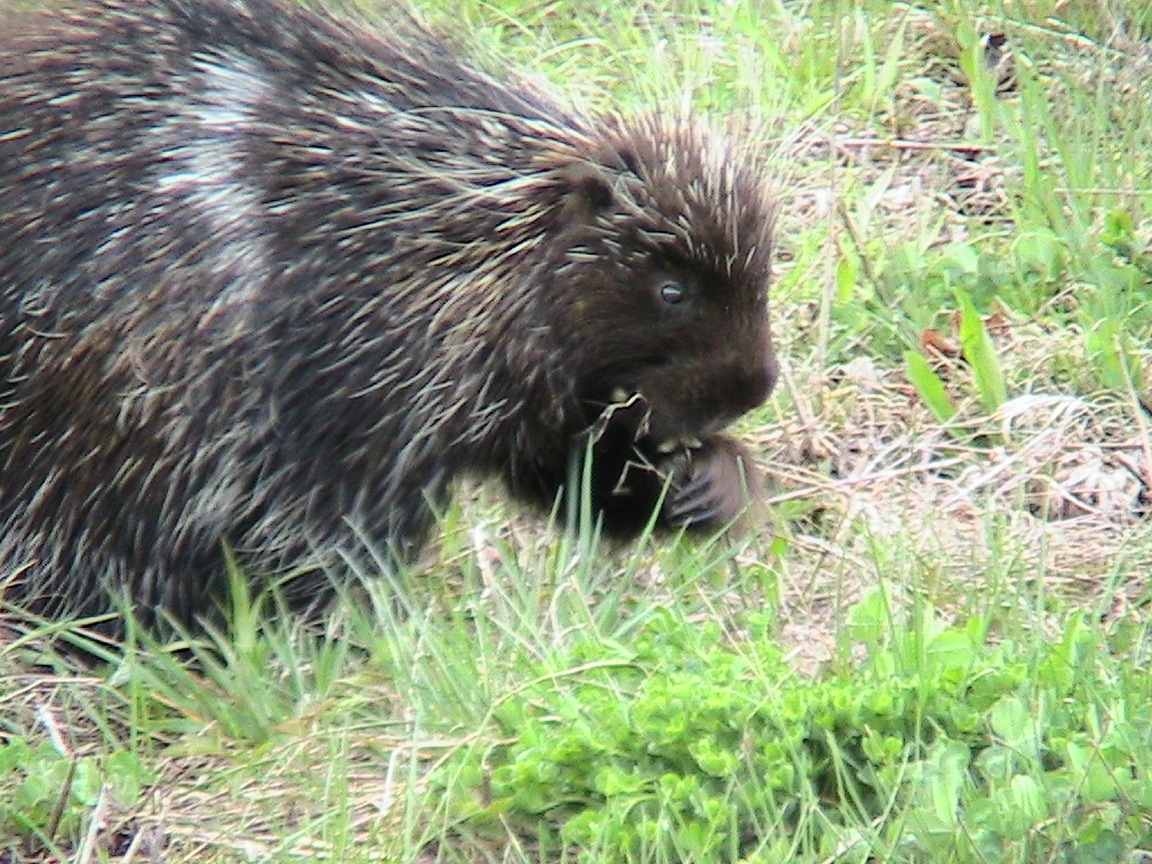
Q. Dear Twig: Why don’t porcupines stick to things? All those pointy quills and all ...
 
A. First, the quills (“kwills”) on a porcupine mostly point backward. So when a porcupine climbs up a tree, for example, its quills don’t aim forward and poke into things by mistake. Like branches, tree trunks or the back ends of bears.

Second, besides pointing backward, the quills also usually lie flat, near the body. This cuts down on the chance of accidents too. The quills do stick up when a porky feels threatened. Maybe a wolf or a dog tries to bother it. The stuck-up, stuck-out quills serve as protection. Special muscles around each quill pull tight and make the quill stand up.

Third, if the stuck-up, stuck-out quills do get stuck into something, like the nose of a dog or the snout of a wolf, they dislodge — come loose — from the porky very easily. This lets the porcupine get away — not stay stuck — while the predator deals with a snootful of quills.

Prickly,
Twig

P.S. Porcupines can’t throw their quills. Nor shoot them. And the quills aren’t poisonous.
--

Notes from Twig: 
  • The quills of the North American porcupine are barbed, hollow, modified hairs. A porcupine has about 30,000 of them.
  • Scientists call the muscles that make quills stand up “piloerectors,” while a special quill-holding skin part called the “spool” lets stuck-up, poked-into-something quills pull loose much more easily than relaxed ones do.
  • Sources included “A Facilitated Release Mechanism for Quills of the North American Porcupine” by Uldis Roze, Queens College, New York, in Journal of Mammalogy, 2002; and “Smart Weapons” by Roze in Natural History, 2006.
  • Twig has been vacationing in a place where porcupines live but hasn’t, unfortunately, run into any.

Using this information for education:
Right about now, families across the country are planning their summer vacations or are looking forward the vacations they already have planned. Students may not be in school during the summer, but that doesn't mean they should pass up the opportunity to make learning fun....like on their vacation!

If you're planning a trip this summer, whether across the country, camping, to the beach, or even to your local zoo, take the time to learn about the animals and wildlife that are native to the area you'll be visiting. Almost every species has fun facts about its members that will amaze and astound your friends and family.

Learning more about the animal sciences can lead to lots of great educational discussions about habitat, animal adaptations, food chains and more.  So go on and have fun on your vacation this summer, but take the time to teach and learn a little, too! 
Related Posts with Thumbnails